Fiyya Qiyya: A Friendly Handwritten Font for Brands
It started with a simple box of lavender shortbread cookies. I had spent weeks perfecting the recipe, sourcing organic butter, and designing a minimalist label that I thought looked incredibly chic. But when I handed the first batch to a potential wholesale buyer at a local market, she paused, squinted at the packaging, and said, "It feels a bit cold." That moment was a gentle but necessary wake-up call. My brand identity was polished, yes, but it lacked warmth. It didn’t invite the customer in; it kept them at arm’s length. I realized I needed a typeface that could bridge the gap between professional quality and approachable charm. That is when I discovered Fiyya Qiyya, a sweet and friendly handwritten font that completely shifted the tone of my small business branding.
Finding Warmth in Typography
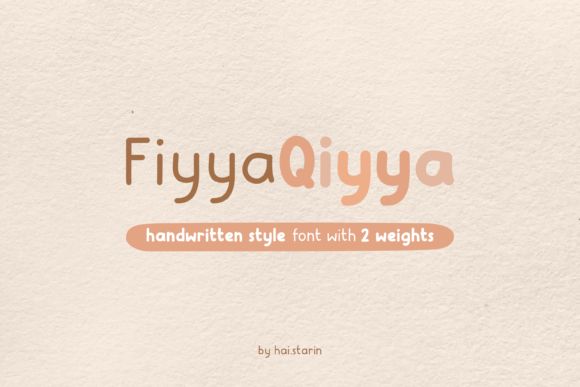
In the world of Script Amp and digital design, there is often a misconception that handwritten fonts are too messy or informal for serious business use. However, Fiyya Qiyya challenges this notion by offering a balance that is rare to find. It is not just a creative font; it is a strategic tool for building connection. The typeface comes in two distinct weights: Regular and Bold. This versatility is crucial for any business owner who needs to maintain visual hierarchy without sacrificing personality.
The Regular weight has a delicate, airy feel. It mimics the natural flow of a pen gliding across paper, with slight variations in stroke width that give it an authentic, human touch. This makes it ideal for longer phrases or secondary information where you want to maintain a soft, inviting mood. On the other hand, the Bold weight commands attention without shouting. It retains the friendly curves of its lighter counterpart but adds enough presence to work effectively as a headline or a logo mark. For a small business, this means you can create a cohesive brand identity using a single premium font family, ensuring consistency across all your design assets.
From Packaging to Social Media: Real-World Applications
After integrating Fiyya Qiyya into my workflow, the transformation was immediate. I redesigned my cookie boxes, replacing the stark, geometric sans serif I had been using with the Bold weight of Fiyya Qiyya for the product name. The result was instant warmth. The letters felt like they were written by hand specifically for the person holding the box. This is the power of a good handwritten font in packaging design. It turns a mass-produced item into something that feels personal and crafted.
Beyond physical products, this display font shines in digital spaces. I updated my Instagram templates to feature quote graphics and promotional announcements using Fiyya Qiyya. Social media is a noisy environment, and users scroll quickly. A font with character stops the eye. The friendly nature of the typeface encouraged more engagement because it felt conversational rather than corporate. Whether I was creating thank-you cards for online orders or designing banners for my website, the font provided a consistent voice. It told my customers, "We care about the details, and we value you."
Consider a café refreshing its menu. Using Fiyya Qiyya for section headers like "Fresh Pastries" or "House Blends" adds a layer of artisanal credibility. Or think about a boutique creating hang tags for clothing items. The font’s legibility ensures that care instructions or brand messages are readable, while its style reinforces the boutique’s unique aesthetic. In each case, the font acts as a silent ambassador for the brand, communicating trust and approachability before a single word is read.
Readability and Professional Polish
One of the biggest concerns business owners have when switching to a script font or handwritten style is readability. Will customers be able to read it on a small mobile screen? Will it print clearly on a tiny sticker? With Fiyya Qiyya, these concerns are largely mitigated by its clean structure. Unlike some decorative fonts that prioritize flair over function, Fiyya Qiyya maintains clear letterforms. The spacing is generous, preventing letters from merging into illegible blobs, which is a common issue in lower-quality typefaces.
However, smart design decisions are still necessary. I learned to use the Bold weight for primary headlines and the Regular weight for shorter subheads. For body text or detailed ingredient lists, I paired Fiyya Qiyya with a clean sans serif font. This combination creates a beautiful contrast. The handwritten element draws attention and adds emotion, while the sans serif provides clarity and structure. This technique is essential in editorial design and web design, where user experience depends on easy navigation and quick information processing.
When using this font for small labels, such as those on candle jars or skincare bottles, I recommend keeping the text brief. Use Fiyya Qiyya for the product name or a short tagline, and rely on a simpler font for the finer print. This ensures that the modern typography remains impactful without becoming cluttered. It is also wise to test your designs in grayscale before printing to ensure that the contrast between the two weights is sufficient for black-and-white applications, such as receipts or monochrome stickers.
Building a Consistent Brand Voice
Consistency is the cornerstone of trust. When a customer sees the same font on your Instagram post, your website banner, and your physical packaging, it reinforces brand recognition. Fiyya Qiyya helps achieve this consistency because of its adaptability. It works equally well in logo design for a playful brand as it does in social media graphics for a lifestyle blogger. By sticking to one primary display font, you reduce decision fatigue and create a streamlined visual language.
Before finalizing your choice, always check the technical specifications. Ensure that the file formats included are compatible with your design software. Look for features like multilingual support if you plan to expand your reach internationally. Most importantly, verify the commercial font licensing. Using a properly licensed commercial font protects your business from legal issues and supports the creators who develop these valuable design assets. Whether you are a crafter selling on Etsy, a coach building a personal brand, or a café owner updating your menu, investing in the right typography is an investment in your business’s future.
Ultimately, Fiyya Qiyya is more than just a collection of letters. It is a tool for storytelling. It allows small businesses to project a personality that is both professional and deeply human. In a market saturated with generic templates, choosing a font with heart can be the difference between being overlooked and being remembered. So, the next time you are designing a label, a post, or a sign, ask yourself: Does this font reflect the warmth I want my customers to feel? If the answer is yes, Fiyya Qiyya might just be the missing piece of your brand puzzle.